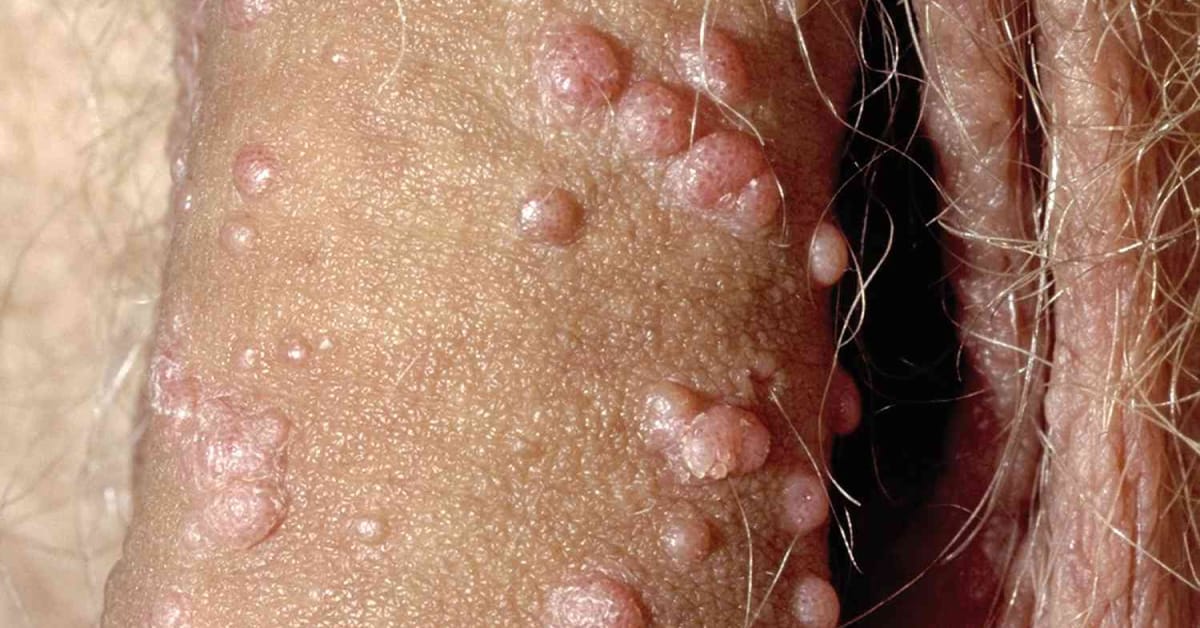

- Stress, anxiety, fatigue & unhealthy coping habits can interfere with sexual function
- Persistent sexual changes deserve proper clinical assessment rather than self-diagnosis
- Malaysian men may experience work, financial, family & performance pressures without discussing them
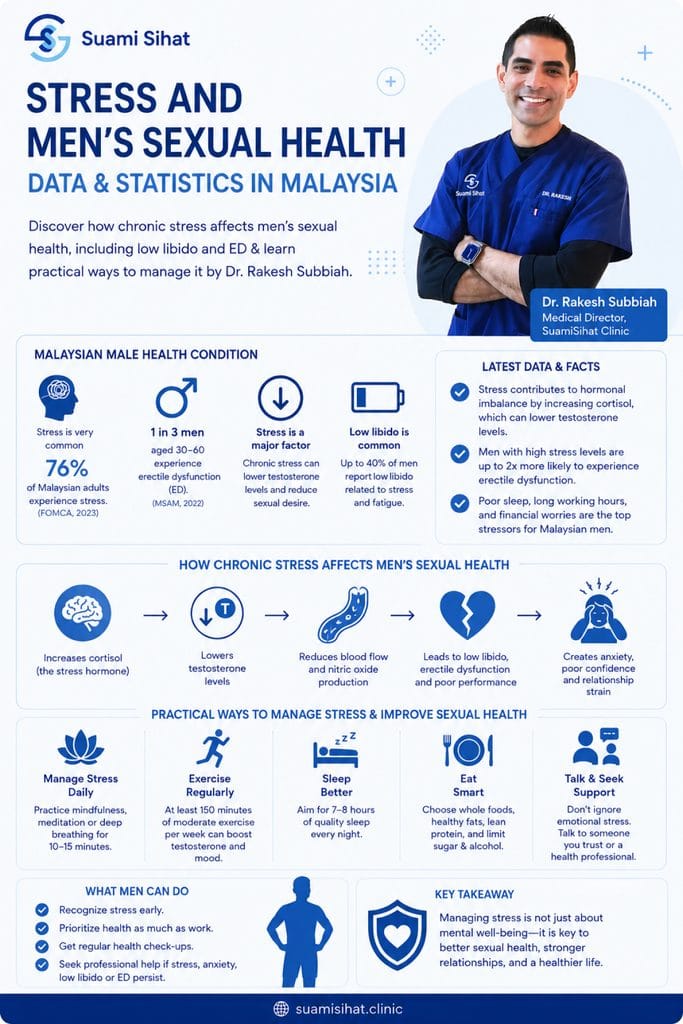
- Stress is a normal response, but persistent stress can affect sexual desire, erections, sleep & relationships
- Identify the cause early, improve lifestyle & seek medical or psychosexual assessment when symptoms persist
Relation Between Stess & Men's Sexual Health
Men stress is not a formal medical diagnosis. Clinically, it refers to psychological and physiological stress experienced by men in response to ongoing demands such as work pressure, financial concerns, relationship difficulties, family responsibilities or performance expectations.
Short-term stress can be adaptive. Chronic stress is different. When stress continues, sleep, mood, concentration, energy and sexual wellbeing may be affected.
For men's sexual health, the important point is that stress does not always act alone. Erectile dysfunction (ED), for example, may involve psychogenic, vascular, hormonal, neurological or mixed causes. The European Association of Urology notes that most ED cases have multiple contributing factors, and psychological distress, anxiety, depression and relationship problems may coexist with physical causes.
Symptoms
Common early symptoms of prolonged stress in men may include:
- Poor sleep or waking tired
- Irritability and low motivation
- Difficulty concentrating
- Persistent worrying
- Reduced energy
- Lower sexual desire
- Difficulty becoming sexually aroused
- Occasional erection difficulty
As stress becomes chronic, some men may notice reduced libido, performance anxiety, weaker or inconsistent erections, reduced sexual satisfaction and relationship tension.
It is important not to assume every erection problem is “just stress”. ED is defined as persistent difficulty achieving or maintaining an erection sufficient for satisfactory sexual activity and can have underlying cardiovascular, metabolic or hormonal causes.
Read : 9 Common Mens Health Issue Among Malaysian (Latest Data)
What Is Driving Stress Among Malaysian Men?
The Malaysian context matters. Stress can come from several overlapping pressures:
| Common pressure | How it may affect sexual health |
|---|---|
| Financial & cost-of-living pressure | Worry, poor sleep and reduced emotional availability |
| Career pressure | Fatigue, anxiety and performance-related sexual problems |
| Family responsibilities | Mental overload and less time for intimacy |
| Ego & social expectations | Fear of sexual failure and reluctance to seek help |
Malaysia's labour market remained highly active in 2025, with 17.09 million people in the labour force and 16.58 million employed persons. Formal-sector male employees recorded median monthly wages of RM2,900 in June 2025. These figures do not measure stress directly, but they illustrate the scale of work and financial responsibilities faced by Malaysian men.
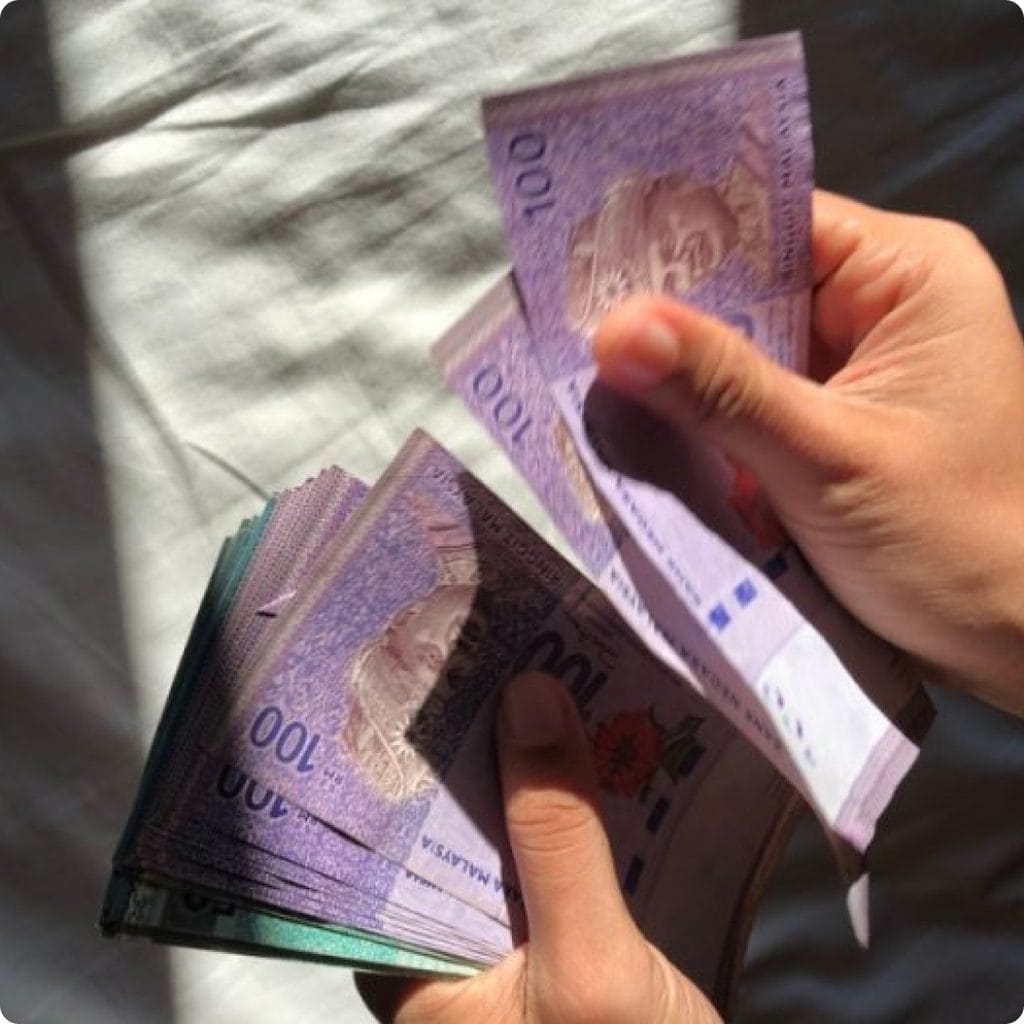
The latest NHMS 2023 also found 4.6% of Malaysian adults had depressive symptoms and 37.7% experienced insufficient sleep. These are not measures of stress-related sexual dysfunction, but they are clinically relevant because poor mental wellbeing and sleep can accompany sexual-health problems.
Read : How Nitrite Oxide Improve Sexual Health & Erections (Review)
What Do We Actually Know About ED?
A Malaysian urban study involving 351 men aged around 58 years on average reported ED in 70.1% of participants. ED was significantly associated with depression, and the authors highlighted the interconnected nature of sexual, psychological and chronic health conditions.
This study is older and involved ageing urban men, so the figure should not be interpreted as the prevalence of ED among all Malaysian men today.
Expected Results
Managing chronic stress may help improve:
- Sleep and daily energy
- Emotional wellbeing
- Sexual confidence
- Sexual desire
- Relationship communication
- Erectile consistency where stress is a contributing factor
However, improvement depends on the cause. If ED is mainly related to diabetes, hypertension, vascular disease, hormonal problems or medication effects, stress management alone may not solve the problem. Current ED guidelines recommend assessing both psychological and physical contributors.

“Stress can affect sexual function more than many men realise. When a man is constantly worried, exhausted or anxious about performance, erections and libido can suffer. The important thing is not to blame yourself we need to identify what is actually causing the problem and treat it properly.”
— Dr. Rakesh Subbiah, Head Doctor & Wellness, SuamiSihat Clinic
Professor Christopher C.K. Ho, from the Urology Unit, Department of Surgery, Universiti Kebangsaan Malaysia Medical Centre, has published on male sexual dysfunction in Asia and highlighted the influence of culture, beliefs, awareness and treatment-seeking behaviour on men's sexual health.
His work is particularly relevant to Malaysia because sexual-health concerns can remain private and under-discussed. Earlier Malaysian research also found barriers among general practitioners in recognising and managing ED, reinforcing why men may delay seeking appropriate care.
When Should You See a Doctor?
Consider a medical assessment when:
- Erectile difficulties keep recurring rather than happening occasionally.
- Libido remains noticeably low for weeks or months.
- Morning erections become consistently less frequent.
- Stress is accompanied by significant anxiety, depressed mood or persistent sleep problems.
- You have diabetes, high blood pressure, high cholesterol, obesity or cardiovascular risk factors.
- Sexual symptoms are affecting your relationship or quality of life.
Read : Men’s Health Screening Guide for Malaysian Men (Doctor Review)
The EAU recommends a comprehensive medical and sexual history, focused physical examination and appropriate laboratory assessment for men presenting with ED. Validated tools such as the International Index of Erectile Function (IIEF) can also help assess sexual-function severity.
Delaying assessment can allow potentially reversible contributors, such as metabolic disease, medication effects, psychological distress or hormonal abnormalities, to remain untreated.
Treatment depends on the underlying cause. Options may include lifestyle modification, psychological or psychosexual therapy, treatment of cardiovascular and metabolic risk factors, and evidence-based ED therapy where clinically indicated.
EAU guidance supports psychological interventions such as cognitive behavioural therapy when appropriate, including alongside medical treatment.
Treatments Highlight : Men's Health Solutions
See All : Treatment Options
Is stress a common cause of erectile dysfunction in Malaysia?
Stress can contribute to ED, particularly psychogenic or performance-related ED. However, Malaysian clinical data do not support saying that stress is the sole cause of most ED cases. Physical and psychological causes frequently overlap.
Can work stress lower a man’s libido?
Yes. Persistent stress may be accompanied by fatigue, poor sleep, anxiety and reduced sexual interest. Low libido should still be assessed clinically because medications, depression, relationship problems and hormonal disorders can also contribute.
Does financial stress affect sexual performance?
It can indirectly. Financial concerns may increase worry, interfere with sleep and reduce emotional availability for intimacy. Malaysian household median income reached RM7,017 in 2024, illustrating the wider economic environment in which many households manage competing financial commitments.
Is stress-related ED permanent?
Not necessarily. When psychological stress is a major contributor, addressing the stressor and treating performance anxiety can improve sexual function. Nevertheless, persistent ED should be assessed because physical causes may coexist.
Should I check testosterone if I am stressed and have low libido?
Not automatically. Testosterone testing should be guided by symptoms and clinical assessment. Low libido can have psychological, relationship, sleep, medication and metabolic causes. Hormonal evaluation may be appropriate when clinically indicated.
Read : How Testosterone Affect Men Fertility and Sexual Health?
Conclusion
Stress is common, but persistent men stress should not be dismissed when it starts affecting libido, erections, sleep or relationships.
The Malaysian evidence shows a meaningful burden of psychological and chronic-health risk factors, while local studies have demonstrated that ED and depression can occur together in men. Current international urology guidance therefore supports looking at the whole patient, rather than treating sexual symptoms in isolation.
Most importantly, experiencing ED or low libido does not mean a man has failed. A proper assessment can help distinguish stress-related sexual problems from underlying medical conditions and identify the most appropriate treatment pathway.
References
- Ministry of Health Malaysia, National Health and Morbidity Survey (NHMS) 2023: Non-Communicable Diseases & Healthcare Demand – Fact Sheet, 2024. Akses: NHMS 2023 Fact Sheet
- The Journal of Sexual Medicine, Erectile Dysfunction and Comorbidities in Aging Men: An Urban Cross-Sectional Study in Malaysia, 01-12-2008. Akses: J Sex Med article
- The Journal of Sexual Medicine, The Relationship Between Perceived Stress and Erectile Function in Patients With Psychogenic Erectile Dysfunction: The Mediating Role of Fatigue, 19-03-2025. Akses: J Sex Med stress and erectile function study
- European Association of Urology, Management of Erectile Dysfunction, current clinical guideline. Akses: EAU Erectile Dysfunction Guideline
- American Urological Association, Erectile Dysfunction: AUA Guideline, 01-04-2018. Akses: AUA Erectile Dysfunction Guideline
This article had been written & reviewed by :
Dr. Rakesh A/L Subbiah
Bachelor of Medicine & Bachelor of Surgery and Obstetrics, National University of Ireland. Dr. Rakesh Subbiah is the Head Doctors & Wellness at SuamiSihat Clinic. Registered under Malaysia Medical Council (MMC) with number 51375