- Sildenafil is unsafe with nitrates & is not suitable for every man with ED
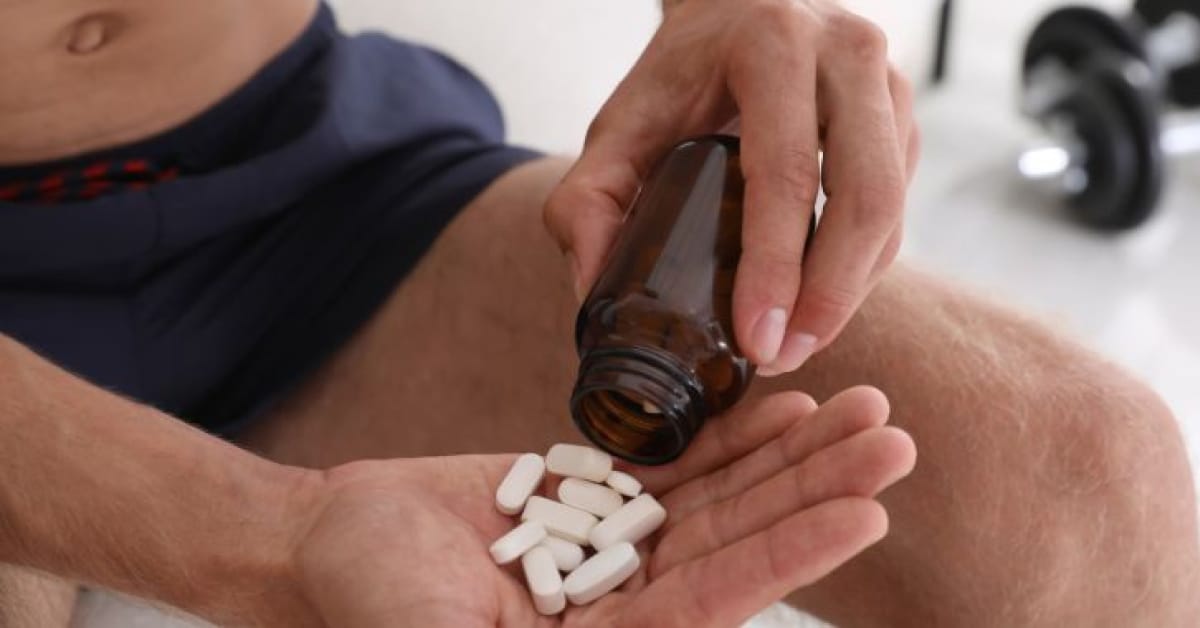
- Sildenafil is a PDE5 inhibitor used to improve erections in men with erectile dysfunction
- A doctor should assess the cause of ED, cardiovascular safety, medicines & the appropriate dose
- Persistent or recurrent ED deserves a proper clinical assessment rather than repeated self-medication
- ED is common and may be linked to vascular, metabolic, medication, neurological or psychological factors
Understanding Sildenafil for ED?
Sildenafil is a medicine in the phosphodiesterase type 5 (PDE5) inhibitor class. It is used to improve the ability to achieve and maintain an erection in men with erectile dysfunction (ED).
MedlinePlus describes ED as the inability to get or keep an erection sufficient for sexual activity. Sildenafil works by increasing penile blood flow during sexual stimulation.
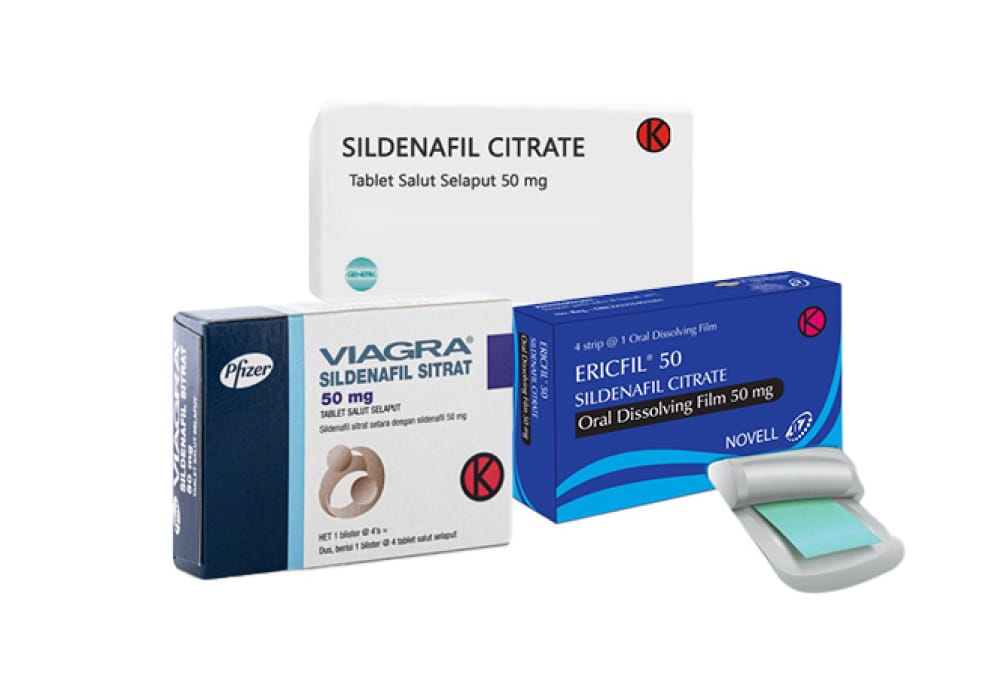
ED is not the same as low libido.
- Low libido: reduced sexual desire.
- Erectile dysfunction: difficulty achieving or maintaining an erection.
- Premature ejaculation: ejaculation that occurs sooner than desired and causes distress or relationship difficulty.
- Hypogonadism/testosterone deficiency: clinical syndrome involving compatible symptoms/signs with consistently low testosterone.
A man can have ED with normal sexual desire. Conversely, he can have low libido while still being physically able to achieve an erection.
That distinction matters because sildenafil primarily treats the erection mechanism, not the underlying cause of every sexual problem.
How common is ED in Malaysia?
ED is not a rare problem.
A Malaysian analysis of NHMS 2019 data involving 2,403 sexually active men aged 18 and above found a prevalence of 31.6% for moderate-to-severe ED (95% CI 28.8–34.6%).
Physical inactivity and several sociodemographic factors were associated with higher odds of moderate-to-severe ED.
More recent Malaysian research has also reported ED among younger men, indicating that erection problems should not automatically be dismissed as an “older man's problem.”
KKM's current ED guideline also notes that ED is associated with conditions including diabetes, cardiovascular disease and depression, and that ED may act as an early marker of systemic vascular dysfunction.
Causes of Erectile Dysfunction
Sildenafil can improve erections, but it does not remove every underlying cause of ED.
Clinically, ED can be:
| Cause | Examples |
|---|---|
| Vascular | Atherosclerosis, hypertension, dyslipidaemia |
| Metabolic | Diabetes, obesity, metabolic syndrome |
| Neurological | Nerve injury, neurological disease |
| Hormonal | Testosterone deficiency and selected endocrine disorders |
| Medication-related | Certain antihypertensive, psychiatric and other medicines |
| Psychological | Performance anxiety, depression, relationship stress |
| Mixed | More than one factor at the same time |
The Malaysian NHMS analysis found ED associated with multiple health and lifestyle factors, while KKM recommends evaluating reversible risk factors and relevant comorbidities rather than treating ED purely as a bedroom problem.

Why vascular health matters?
An erection is fundamentally a blood-flow event.
During sexual stimulation, nitric oxide signalling increases cyclic guanosine monophosphate (cGMP), allowing penile smooth muscle to relax and blood to enter the erectile tissue.
If vascular function is impaired, an erection may be harder to achieve or maintain.
This is why ED can coexist with hypertension, diabetes, dyslipidaemia and cardiovascular disease. KKM and EAU both recommend assessment of relevant cardiovascular and metabolic risk factors in men with ED.
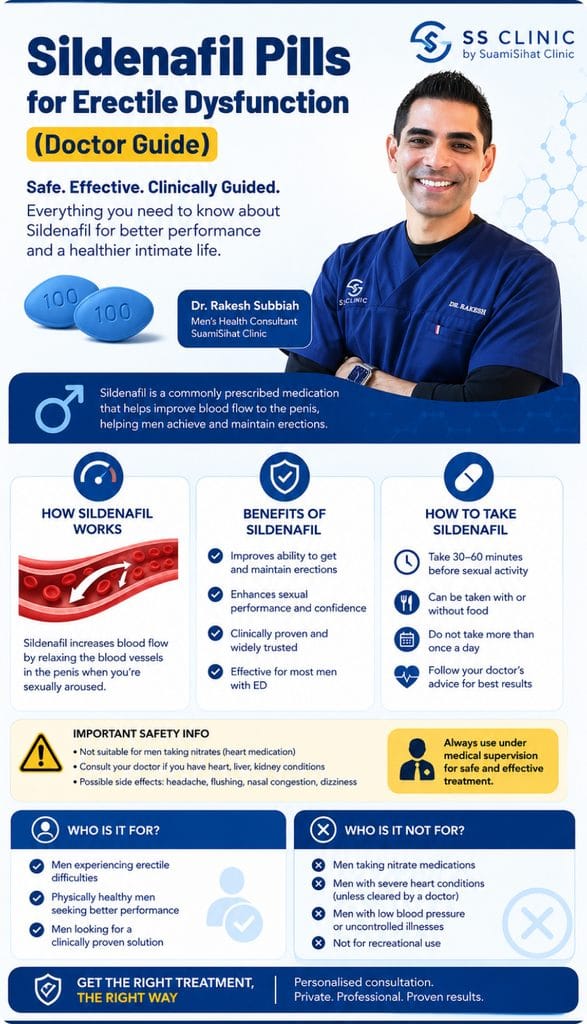
Symptoms of Erectile Dysfunction
ED can appear gradually rather than suddenly.
Early or intermittent symptoms
A man may notice:
- erections are less firm than before;
- erections take longer to develop;
- erections disappear during intercourse;
- difficulty maintaining rigidity;
- more frequent “failed” attempts;
- reduced confidence during sex.
More established symptoms
The problem may become:
- persistent across multiple sexual encounters;
- present with different partners or circumstances;
- associated with anxiety about sexual performance;
- disruptive to intimacy;
- accompanied by reduced spontaneous or morning erections.
A single unsuccessful sexual encounter does not automatically mean ED.
What matters clinically is the pattern, persistence and personal distress.
How Sildenafil Works?
Sildenafil is a selective PDE5 inhibitor.
To understand it, consider the normal erection pathway.
Step 1: Sexual stimulation
Sexual stimulation activates neural and endothelial pathways.
Step 2: Nitric oxide is released
Nitric oxide helps activate the guanylate cyclase–cGMP pathway.
Step 3: cGMP relaxes penile smooth muscle
This reduces vascular resistance in the erectile tissue, allowing greater arterial inflow.
Step 4: PDE5 normally breaks down cGMP
PDE5 is an enzyme that degrades cGMP.
Step 5: Sildenafil inhibits PDE5
By inhibiting PDE5, sildenafil helps maintain cGMP signalling.
The result is improved penile blood flow when sexual stimulation is present. The classic ACC/AHA scientific statement describes sildenafil as a selective PDE5 inhibitor that promotes smooth-muscle relaxation and vasodilation.
Sildenafil does not automatically produce an erection
This is one of the most important things for patients to understand.
Sildenafil:
- does not directly create sexual desire;
- does not act as an aphrodisiac;
- does not guarantee an erection;
- and does not “force” an erection in the absence of sexual stimulation.
MedlinePlus specifically states that sildenafil does not increase sexual desire and works by increasing penile blood flow during sexual stimulation.
Read : How Erectile Dysfunction Therapy Treat Your Penile in Weeks
Benefits of Sildenafil for ED
When appropriately prescribed, sildenafil can provide several clinically meaningful benefits.
1. Improves erection rigidity
Clinical trials and guideline reviews consistently support PDE5 inhibitors as effective treatments for ED. EAU recommends PDE5 inhibitors as first-line pharmacological therapy for most men with ED.
2. Helps maintain an erection
The objective is not merely to obtain an erection. The clinically meaningful outcome is an erection with sufficient rigidity to permit satisfactory sexual activity.
3. Can improve sexual confidence
Repeated ED can create a cycle:
failed erection → anxiety → increased sympathetic activation → more difficulty getting an erection → further anxiety.
Effective treatment may help interrupt that cycle. However, medication should not replace evaluation of relationship, psychological or health-related contributors.
4. Convenient as-needed treatment
Sildenafil is usually taken when needed rather than every day for ED. MedlinePlus states that it is generally taken approximately one hour before sexual activity and no more than once every 24 hours unless the clinician gives different instructions.
How to Take Sildenafil
The exact dose should be determined by a doctor.
1. Typical starting dose
The Malaysian KKM ED quick-reference guideline lists:
Sildenafil: initial dose 50 mg, taken approximately 1 hour before sexual activity.
The guideline gives an effectiveness window beginning around 30 minutes after administration and notes a half-life of approximately 4 hours.
EAU lists sildenafil doses of 25 mg, 50 mg and 100 mg, with 50 mg as the recommended starting dose, adjusted according to response and adverse effects.
Practical table
| Factor | Clinical point |
| Starting dose | Usually 50 mg |
| Lower dose | 25 mg may be appropriate for selected men |
| Higher dose | 100 mg may be used when clinically appropriate |
| Timing | About 1 hour before sexual activity |
| Frequency | Usually no more than once in 24 hours |
| Sexual stimulation | Required for the medicine to work properly |
| High-fat meal | May delay onset |
| Dose adjustment | Depends on response, adverse effects, age, comorbidities and medicines |
MedlinePlus notes that sildenafil can be taken with or without food, but a high-fat meal can delay the onset of action.
2. Do not increase the dose on your own
If 50 mg seems ineffective, the correct response is not automatically to take another tablet.
A clinician may need to assess:
- whether the medicine was taken correctly;
- whether adequate sexual stimulation occurred;
- the timing relative to intercourse;
- other medicines;
- alcohol or lifestyle factors;
- whether the ED is severe or vascular;
- and whether another treatment is more appropriate.
EAU specifically recommends tailoring therapy to efficacy, tolerability, patient preference and the clinical context.
Sildenafil Side Effects
Most adverse effects are related to vasodilation and are generally mild and self-limited.
Common effects include:
- headache;
- flushing;
- indigestion/dyspepsia;
- nasal congestion;
- back or muscle pain;
- light-headedness;
- visual colour changes or visual disturbance.
KKM lists headache, flushing, dyspepsia, nasal congestion, back pain, myalgia and visual abnormalities among reported adverse events.
MedlinePlus also warns about sudden hearing loss, severe visual loss, chest pain, fainting and prolonged or painful erection as reasons for urgent medical assessment.
Priapism
Priapism means a prolonged, usually painful erection that persists beyond the period expected from normal sexual activity.
An erection lasting more than 4 hours is an emergency because prolonged lack of oxygen in the penile tissue can cause permanent damage.
KKM specifically advises emergency treatment for an erection lasting more than four hours.
Who Is Sildenafil For?
Sildenafil may be appropriate for an adult man with ED when a doctor has determined that:
- the symptoms are consistent with erectile dysfunction;
- sexual activity is medically appropriate;
- there is no contraindicating medication;
- cardiovascular risk has been considered;
- the dose can be safely individualised.
EAU recommends assessing relevant reversible risk factors, glucose, lipid profile and total testosterone where clinically indicated.
A man may still be suitable for sildenafil even when ED is associated with:
- diabetes;
- hypertension;
- high cholesterol;
- obesity;
- psychological stress;
- age-related vascular changes.
But these conditions may change the overall treatment plan.
Who Is Sildenafil Not For?
1. Men taking nitrates
This is the most important safety issue.
Sildenafil must not be combined with organic nitrates or nitric-oxide donor medicines such as glyceryl trinitrate (GTN) because the combination can produce a dangerous fall in blood pressure.
KKM specifies a 24-hour interval from the last sildenafil dose before nitrate administration in its ED quick-reference guideline.
The ACC/AHA consensus document also states that sildenafil should not be prescribed with nitrate therapy because of the risk of potentially life-threatening hypotension.
This includes recreational nitrate-containing substances known as “poppers.” MedlinePlus specifically warns about amyl nitrate, amyl nitrite and butyl nitrate.
2. Men taking certain interacting medicines
Some medicines can alter sildenafil concentrations.
A doctor needs a complete medication history, including:
- prescription medicines;
- over-the-counter medicines;
- supplements;
- herbal products;
- recreational drugs.
3. Men with unstable cardiovascular disease
A man may not be medically fit for sexual activity itself.
MedlinePlus advises men to tell their clinician if they have been advised to avoid sexual activity for medical reasons or have experienced chest pain during sexual activity.
The older ACC/AHA consensus similarly highlighted active coronary ischaemia, certain heart-failure states, low blood pressure and complex cardiovascular medication regimens as situations requiring caution or specialist assessment.
4. Men with a previous serious reaction
Sildenafil should not be used in patients with known hypersensitivity to the medication or its components. KKM lists this as a contraindication.
5. Men with certain eye conditions or prior sudden vision loss
A history of sudden severe visual loss or particular retinal disorders should be discussed with the prescribing doctor. MedlinePlus advises specific caution and immediate assessment for sudden vision loss.
Sildenafil vs Tadalafil: Are They the Same?
No.
Both are PDE5 inhibitors, but their pharmacokinetic profiles and practical use differ.
| Feature | Sildenafil | Tadalafil |
| Typical use | As needed | As needed or daily in selected indications |
| Usual onset | Around 30–60 minutes | Often around 30 minutes |
| Duration | Shorter | Longer |
| Food effect | High-fat meal may delay onset | Less meal-sensitive |
| Best fit | Men comfortable planning sexual activity | Men who prefer a longer window |
EAU notes that sildenafil 50 mg is often favoured when prioritising high efficacy, whereas tadalafil may be preferred by some men when tolerability or a longer window is more important.
The choice should be based on the patient's health, sexual pattern, adverse effects, medication interactions and preference, not simply which medicine is marketed as “stronger.”
Clinical Procedure: Sildenafil at Men’s Health Clinic
For an ED patient, the clinically appropriate pathway is not simply:
“Take a pill and see what happens.”
A proper pathway generally involves:
1. Private ED consultation
The doctor should establish:
- how long the ED has been present;
- whether it is situational or consistent;
- erection firmness;
- ability to maintain an erection;
- libido;
- ejaculation;
- morning/spontaneous erections;
- medical history;
- lifestyle;
- current medication;
- cardiovascular symptoms.
KKM's primary-care guideline for male sexual and reproductive health emphasises early detection and clinical assessment of male sexual problems.
2. Risk-factor assessment
Depending on the presentation, evaluation may include:
- blood pressure;
- glucose/HbA1c;
- lipid profile;
- testosterone when indicated;
- cardiovascular risk assessment;
- medication review.
EAU strongly recommends identifying reversible metabolic and lifestyle risk factors and considering glucose, lipid profile and total testosterone when clinically relevant.
3. Determine whether sildenafil is suitable
If ED is confirmed and sildenafil is medically appropriate, the doctor can determine the starting dose and provide instructions regarding timing, frequency and interactions.
4. Review response
If the medicine does not work, the answer is not necessarily “sildenafil doesn't work for me.” The clinician may review:
- timing;
- dose;
- sexual stimulation;
- adherence;
- medication interactions;
- severity of ED;
- psychological factors;
- or underlying vascular/metabolic disease.
5. Consider other treatment options when appropriate
SuamiSihat Clinic also publishes an ED pathway involving prescription ED medication, diagnostic assessment and non-oral options. Its ESWT page, however, describes shockwave therapy, not sildenafil treatment.
The provided link https://suamisihat.clinic/treatment/eswt/ therefore should not be presented as the “clinical procedure for sildenafil.”
Treatment : Shockwave Therapy for Longer & Stronger (Non-Surgical)
Where oral medication is unsuitable, ineffective or not preferred, the clinician may discuss other evidence-based ED options according to the individual's diagnosis.
Read : P Shot for Men : Penile Tissue Repair for Erection Quality
What Happens If You Delay Getting Help?
A man may think:
“It's only a bedroom issue. I'll deal with it later.”
That assumption can be costly.
ED may coexist with diabetes, hypertension, dyslipidaemia, obesity and cardiovascular disease. Malaysian research has highlighted its association with multiple cardiometabolic and lifestyle factors, while KKM describes ED as a possible early marker of systemic vascular dysfunction.
Delaying assessment can mean delaying:
- detection of diabetes;
- cardiovascular risk assessment;
- treatment of hypertension or dyslipidaemia;
- identification of medication-related ED;
- treatment of psychological contributors;
- evaluation of testosterone deficiency where indicated.
There is also a relationship impact. Persistent ED can contribute to:
- avoidance of intimacy;
- performance anxiety;
- reduced confidence;
- relationship stress;
- worsening sexual self-esteem.
The Malaysian NHMS-based study specifically noted adverse effects on psychosocial well-being and couples' quality of life.
When Should You See a Doctor?
A clinical assessment is particularly appropriate when:
1. ED is recurring
Repeated difficulty getting or maintaining erections deserves assessment rather than repeated trial-and-error with pills.
2. ED occurs at a younger age
Younger age does not exclude ED. A 2026 Malaysian study reported ED in sexually active men aged 18–39, with an overall prevalence of 32.7% in the study population.
3. You also have cardiometabolic risk factors
Examples include:
- diabetes;
- high blood pressure;
- high cholesterol;
- obesity;
- smoking;
- low physical activity.
4. You have reduced libido
Low desire may suggest a different or additional problem that sildenafil alone may not address.
5. You have pain, penile curvature or urinary symptoms
These may indicate other urological conditions requiring assessment.
6, You experience chest pain during sexual activity
This is not simply a “sildenafil issue.” Sexual activity itself may be unsafe in some cardiovascular conditions and requires medical evaluation.
What Malaysian clinical evidence tells us
ED affects a substantial proportion of Malaysian men.
The NHMS 2019 analysis found 31.6% moderate-to-severe ED among sexually active Malaysian men aged 18 years and above
The authors included researchers from the Institute for Public Health, National Institutes of Health, Ministry of Health Malaysia, as well as the Department of Surgery, Hospital USM, Universiti Sains Malaysia, and the Department of Family Medicine, School of Medical Sciences, Universiti Sains Malaysia.
This Malaysian evidence matters because ED should not be approached purely using imported assumptions. Local age, metabolic risk, physical activity, healthcare access and social stigma all influence how men present for treatment.
A key Malaysian research contributor is Dr. Muhammad Solihin Rezali, from the Institute for Public Health, National Institutes of Health, Ministry of Health Malaysia, whose team analysed NHMS 2019 ED data.
Another author, Dr. Mohamed Ashraf Mohamed Daud, is affiliated with the Department of Surgery, Hospital USM, Universiti Sains Malaysia.
These local investigators provide important Malaysian epidemiological context, while KKM's ED guideline provides the clinical framework for assessment and treatment.

“Sildenafil can be very effective for the right patient, but it should not be treated as a universal ‘strong pill’. When a man comes in with erectile dysfunction, the important question is not only whether he wants sildenafil. We also need to understand why the erection is failing, whether sexual activity is safe, what medicines he is taking and whether there are underlying health risks that need attention.”
Dr. Rakesh Subbiah
Head Doctor, SuamiSihat Clinic
Frequently Asked Questions
1. Is sildenafil safe for Malaysian men with ED?
Sildenafil can be safe and effective when appropriately prescribed, but it is not suitable for everyone. The most important contraindication is concurrent use of organic nitrates or nitric-oxide donor medicines because of the risk of severe hypotension. KKM specifically advises against concurrent use.
2. Can I buy sildenafil and take 100 mg immediately?
Do not assume 100 mg is the correct starting dose.
KKM lists 50 mg as the initial dose, while EAU recognises 25–100 mg as the dosing range for sildenafil and recommends adjusting it according to response and adverse effects. The appropriate dose may be lower in some men.
3. Does sildenafil make you last longer?
Not directly.
Sildenafil is primarily an erectile function treatment, not a dedicated treatment for premature ejaculation. A man who ejaculates too quickly but can maintain a firm erection may need a different assessment and treatment strategy.
4. Can I take sildenafil if I have diabetes, high blood pressure or high cholesterol?
Possibly, but these conditions should be disclosed to the doctor.
They are common risk factors associated with ED, and sildenafil may still be appropriate after cardiovascular and medication assessment. KKM and EAU both emphasise identifying and managing reversible risk factors and associated diseases.
5. What should I do if sildenafil does not work?
Do not automatically take another tablet or double the dose.
First, review the timing, dose, sexual stimulation, medication interactions and underlying cause with a doctor. If sildenafil remains unsuitable or ineffective, other ED treatment options can be considered based on the diagnosis.
Conclusion
Sildenafil is one of the best-established oral medicines for erectile dysfunction.
It works by inhibiting PDE5 and preserving cGMP signalling, allowing better penile blood flow during sexual stimulation. For many men, it can improve:
- erection firmness;
- ability to maintain an erection;
- sexual confidence;
- and overall sexual function.
But sildenafil is not a cure-all. It does not directly increase libido, does not treat every cause of ED, and can be dangerous when combined with nitrates.
In Malaysia, KKM's ED guideline lists 50 mg as the usual initial sildenafil dose, with treatment adjusted according to individual response and adverse effects. EAU likewise recommends PDE5 inhibitors as first-line pharmacological therapy for most men with ED.
The safest approach is therefore:
diagnose the ED → assess cardiovascular and medical risks → review medications → select the appropriate treatment → monitor the response.
For a man who repeatedly struggles to get or keep an erection, seeing a qualified doctor is more useful than repeatedly experimenting with “stronger” pills bought without medical assessment.
References :
- Ministry of Health Malaysia, Management of Erectile Dysfunction: Clinical Practice Guidelines, 28-04-2025
- Ministry of Health Malaysia, Quick Reference for Healthcare Providers: Management of Erectile Dysfunction, 28-04-2025
- European Association of Urology, Management of Erectile Dysfunction. EAU Guidelines on Sexual and Reproductive Health, 23-08-2026
- Ministry of Health Malaysia, Garis Panduan Pengesanan Awal Masalah Kesihatan Seksual dan Reproduktif Lelaki di Penjagaan Kesihatan Primer, 13-02-2026
- Scientific Reports, Prevalence and associated factors of moderate to severe erectile dysfunction among adult men in Malaysia, 06-12-2023
- Drugs.com, Sildenafil: Usage, Dosage, Side Effects & Warnings, 23-08-2026
This article has been reviewed and verified by:
Dr. Rakesh A/L Subbiah
Bachelor of Medicine & Bachelor of Surgery and Obstetrics, National University of Ireland. Dr. Rakesh Subbiah is the Head Doctor at the SuamiSihat Clinic network. He is a registered medical practitioner under the Malaysia Medical Council (MMC), No. 51375.