
- It can affect sexual function, energy, mood, muscle & fertility
- Diagnosis requires symptoms plus consistently low testosterone
- Proper testing helps determine the cause & safest treatment
- Symptoms can overlap with obesity, diabetes, stress & other conditions
- Male hypogonadism means testosterone deficiency with compatible symptoms
So, What is Male Hypogonadism?
Male hypogonadism is a clinical condition in which the body has inadequate androgen production, particularly testosterone, together with compatible symptoms or signs. It may also involve impaired sperm production.
There are two broad forms:
| Type | Problem occurs |
|---|---|
| Primary hypogonadism | Testes do not produce sufficient testosterone |
| Secondary hypogonadism | Hypothalamus or pituitary does not adequately stimulate the testes |
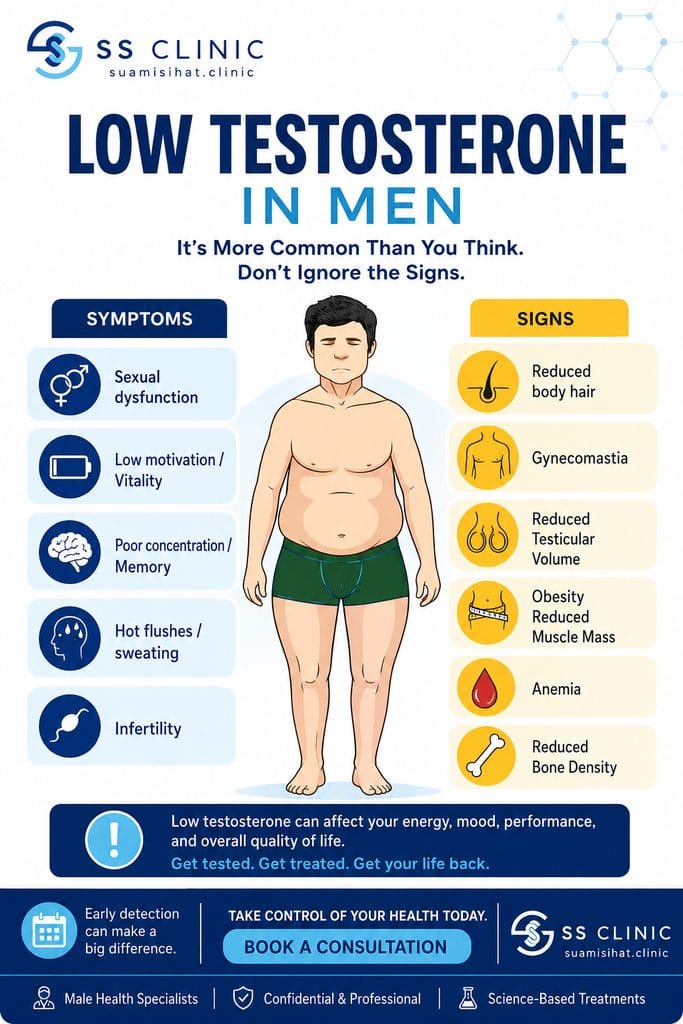
A third concept is functional hypogonadism, where obesity, metabolic disease, chronic illness or certain medicines interfere with the hypothalamic-pituitary-testicular (HPT) axis without an obvious permanent structural abnormality.
Importantly, low testosterone on one blood test does not automatically mean male hypogonadism. EAU and Endocrine Society guidance recommend combining compatible symptoms with consistently low testosterone measurements.
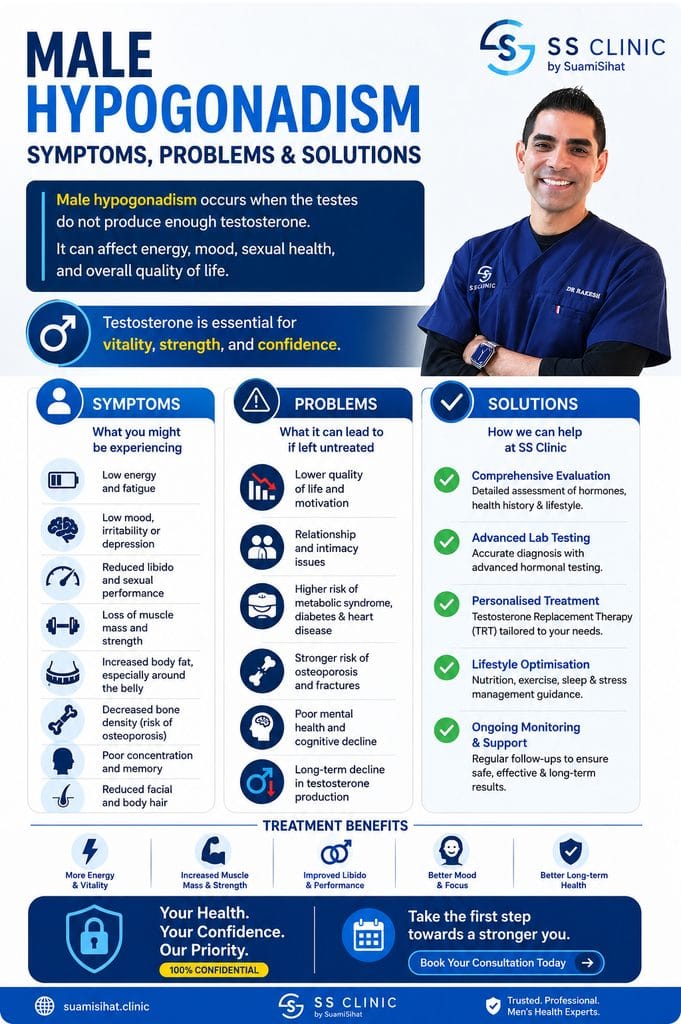
Symptoms of Male Hypogonadism
Sexual symptoms are among the more specific symptoms, including:
- Reduced libido or sexual desire
- Fewer spontaneous or morning erections
- Erectile dysfunction
- Reduced sexual activity
- Delayed ejaculation
Other symptoms can include persistent fatigue, reduced physical strength, decreased motivation, low mood, difficulty concentrating and reduced exercise capacity.
Symptoms may develop gradually, which is why some men attribute them simply to ageing, work stress or being “tired”.
Common Problems Link to Low Testosterone
Male hypogonadism can affect several areas of health:
- Sexual health: reduced libido and erectile function
- Body composition: increased fat mass and reduced muscle mass
- Bone health: reduced bone mineral density
- Mood: low mood and reduced motivation
- Fertility: impaired sperm production in some forms of hypogonadism
- Quality of life: reduced energy and physical performance
Obesity, type 2 diabetes and metabolic syndrome are particularly relevant because they are strongly associated with functional hypogonadism.
Why Testing Your Hormone Matters
A proper diagnosis is more than checking whether testosterone is “low”.
KKM guidance states that male hypogonadism should be supported by symptoms and low testosterone measured using at least two early-morning blood samples before 10:00 a.m.
EAU recommends measuring total testosterone in the morning, preferably between 07:00 and 10:00, in a fasting state, and repeating the measurement on separate occasions when the initial result is low. A total testosterone level around 12 nmol/L (3.5 ng/mL) is used by EAU as a reliable threshold for late-onset hypogonadism, interpreted alongside symptoms and clinical context.
Depending on the case, doctors may also assess LH, FSH, prolactin, SHBG and calculated free testosterone, as well as metabolic health.
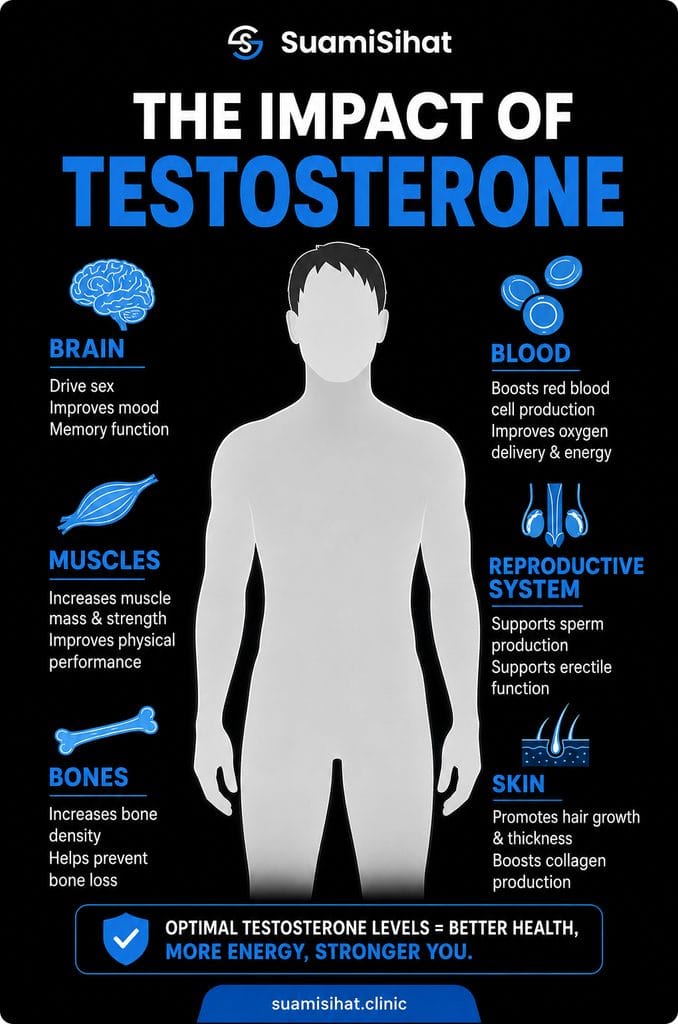
Clinical Treatment for Male Hypogonadism
Treatment should target the underlying cause rather than simply increasing testosterone.
1. Comprehensive Evaluation
The doctor reviews symptoms, medical history, medications, lifestyle, sexual function, fertility plans and relevant physical findings.
2. Advanced Laboratory Testing
Testing may include testosterone and, when indicated, LH, FSH, prolactin, SHBG, free testosterone, blood count, metabolic markers and prostate-related assessment.
3. Personalised Treatment
For confirmed testosterone deficiency with appropriate indications, testosterone replacement therapy (TRT) may be considered. KKM's formulary lists testosterone replacement for male hypogonadism when testosterone deficiency has been confirmed clinically and biochemically.
4. Lifestyle Optimisation
Weight management, regular physical activity and treatment of metabolic conditions can improve overall health and may improve testosterone levels in men with functional hypogonadism. EAU recommends addressing obesity, comorbidities and contributing medications before or alongside testosterone treatment.
5. Ongoing Monitoring
Testosterone treatment requires follow-up. Monitoring may include testosterone levels, haematocrit and prostate-related assessment where clinically appropriate. EAU recommends testosterone and haematocrit monitoring at 3, 6 and 12 months, followed by annual monitoring.
How Treatment Helps
When true testosterone deficiency is corrected, evidence suggests potential improvement in:
- Libido and sexual desire
- Mild erectile dysfunction associated with hypogonadism
- Sexual satisfaction
- Energy and wellbeing
- Body composition
- Bone mineral density
The benefit is most relevant to men who actually have hypogonadism. Testosterone should not be used simply as an “energy booster” in men with normal testosterone levels.
Expected Results
The timeline varies. Sexual symptoms may improve after testosterone levels are restored, while changes in body composition, bone health and other outcomes can take longer.
Treatment is not about achieving the highest possible testosterone level. The clinical goal is to restore testosterone toward an appropriate physiological range while monitoring safety and symptoms.
Who Can Benefit?
Assessment may be appropriate for men experiencing persistent low libido, reduced morning erections, erectile difficulties, unexplained fatigue or physical changes, particularly when accompanied by obesity, diabetes, metabolic syndrome or other relevant medical conditions.
Fertility is critical. Exogenous testosterone can suppress gonadotropins and sperm production. Therefore, men actively trying to father a child should discuss fertility before starting TRT. EAU specifically recommends against testosterone therapy in men seeking fertility treatment.
Scientific Evidence
The evidence base supports a careful, diagnosis-first approach. EAU's 2026 guideline update reviewed literature through 25 May 2025, with more than 1,100 records screened for the hypogonadism chapter.
EAU reports that testosterone therapy can improve libido and some aspects of sexual function in hypogonadal men, while evidence does not support testosterone therapy for sexual dysfunction in men whose testosterone is normal.
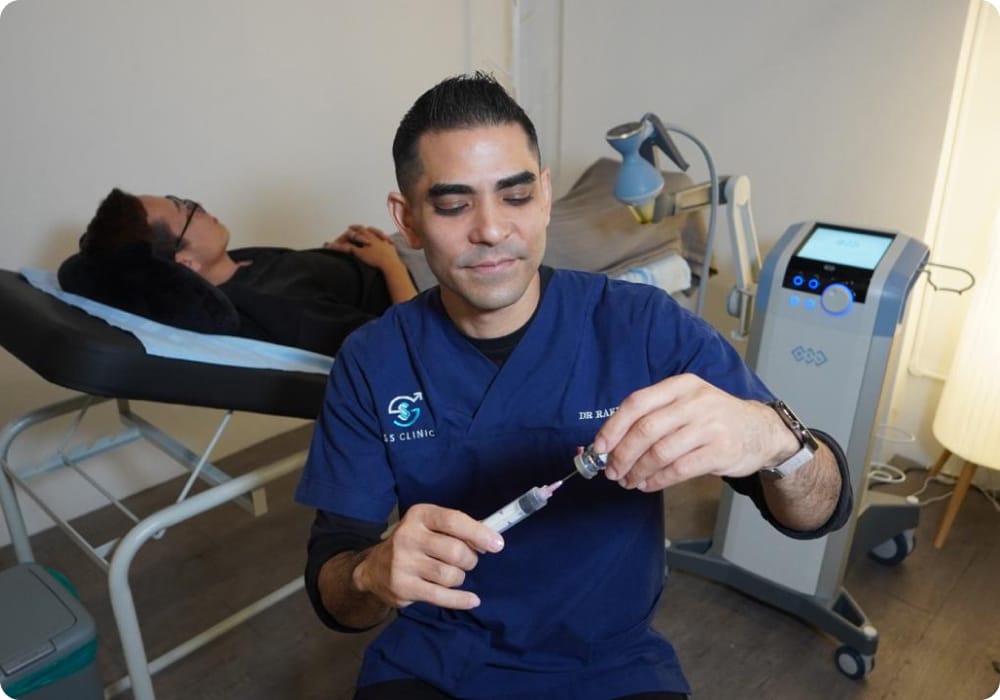
"Low energy, low libido or erection problems shouldn’t just be brushed off as “normal.” If they persist, we need to find out why—not simply focus on boosting testosterone.'
— Dr. Rakesh Subbiah, Head Doctors & Wellness, SuamiSihat Clinic
Clinical Procedure at SuamiSihat Clinic
At SuamiSihat Clinic, the published hormone-replacement pathway involves :
doctor consultation → baseline blood testing → treatment selection → treatment administration → ongoing monitoring.
The clinic lists testosterone testing alongside other hormone and safety markers before treatment and describes follow-up hormone testing approximately every 8–12 weeks.
However, clinical suitability should always be determined by the treating doctor. TRT is not appropriate for every man with fatigue or sexual difficulties, and fertility intentions must be discussed before treatment.
Expert Review in Malaysia
The Malaysian clinical perspective is particularly relevant. Professor Dr. Shanggar A/L Kuppusamy, Consultant Urologist and Professor in the Department of Surgery, Faculty of Medicine, Universiti Malaya, was an external reviewer for KKM's 2025 Management of Erectile Dysfunction clinical practice guideline.
His involvement reflects an important principle for Malaysian men: sexual symptoms should be evaluated within the wider context of urological, cardiovascular, metabolic and hormonal health.
Asian research has also highlighted that hypogonadism and sexual dysfunction occur across Asian populations, while cultural barriers and reluctance to discuss sexual health can affect help-seeking behaviour.
When To See A Doctor?
See a doctor when symptoms are persistent, progressive or affecting sexual function, relationships, work or quality of life.
Do not self-diagnose from a single testosterone test. Low testosterone can occur temporarily during acute illness and may also reflect obesity, medication effects or other medical conditions.
Delaying assessment can mean missing a treatable cause such as metabolic disease, pituitary dysfunction or medication-related suppression. For men planning children, delaying a fertility-focused assessment may also lead to inappropriate testosterone use that suppresses sperm production.
Frequently Asked Questions
1. Is male hypogonadism common among Malaysian men?
Hypogonadism is associated with obesity, diabetes and metabolic disease, which are important health concerns in Malaysia. However, there is no single national figure that can accurately represent all Malaysian men with confirmed hypogonadism.
Diagnosis requires clinical assessment and biochemical confirmation.
2. What testosterone level is considered low?
There is no universal number that should be interpreted without context. EAU uses 12 nmol/L as a reliable threshold for late-onset hypogonadism when compatible symptoms are present, while KKM emphasises repeated early-morning testing.
3. Can TRT improve erectile dysfunction?
It can improve sexual function in men with confirmed hypogonadism. It is not recommended as a general ED treatment for men with normal testosterone.
4. Can I take TRT while trying to have a baby?
Usually not. Exogenous testosterone can suppress sperm production. Men seeking fertility should tell their doctor before treatment so fertility-preserving options can be considered.
5. Can lifestyle changes improve low testosterone?
Yes, particularly when functional hypogonadism is associated with obesity or metabolic health problems. Weight management and regular physical activity are recommended components of management.
Conclusion
Male hypogonadism is a medical condition, not simply a normal consequence of getting older. Persistent low libido, reduced morning erections, erectile difficulties, fatigue and physical changes deserve proper evaluation.
The safest approach is straightforward: confirm testosterone deficiency, identify its cause, consider fertility, treat contributing health problems and monitor treatment carefully.
For men experiencing persistent symptoms, consultation with a qualified doctor can provide a clearer diagnosis and evidence-based treatment pathway rather than relying on supplements or self-prescribed testosterone.
References :
- Ministry of Health Malaysia, Primary & Secondary Prevention of Cardiovascular Disease 2017, 17-07-2017. Akses: KKM Clinical Practice Guideline – Primary & Secondary Prevention of Cardiovascular Disease
- Ministry of Health Malaysia, Formulari Ubat KKM (FUKKM) – Testosterone, 2026. Akses: KKM Formulary – Testosterone for Male Hypogonadism
- European Association of Urology, Male Hypogonadism – EAU Guidelines on Sexual and Reproductive Health, 2026. Akses: EAU Guidelines – Male Hypogonadism
- Endocrine Society, Testosterone Therapy in Men With Hypogonadism: Clinical Practice Guideline, 19-03-2018. Akses: Endocrine Society – Testosterone Therapy Guideline
- Asian Journal of Andrology, Christopher CK Ho et al., Male sexual dysfunction in Asia, 01-07-2011. Akses: Asian Journal of Andrology – Male Sexual Dysfunction in Asia
This article had been written & reviewed by:
Dr. Rakesh A/L Subbiah
Bachelor of Medicine & Bachelor of Surgery and Obstetrics, National University of Ireland. Dr. Rakesh Subbiah is the Head Doctors & Wellness at SuamiSihat Clinic. Registered under Malaysia Medical Council (MMC) with number 51375.