
- Consult a qualified medical professional for safe, individualized weight management strategies
- To address metabolic dysfunction, visceral adiposity & obesity-related testosterone reduction in men
- Unsupervised over-the-counter supplement use, metabolic slowdown & hormonal imbalance affecting male vitality
- Evidence-based clinical assessment, tailored pharmacotherapy, and supervised hormone balancing at SuamiSihat Clinic
- Medical-grade weight loss pills and pharmacotherapy options prescribed under clinical supervision for weight management
Weight Loss Pills in Clinical View
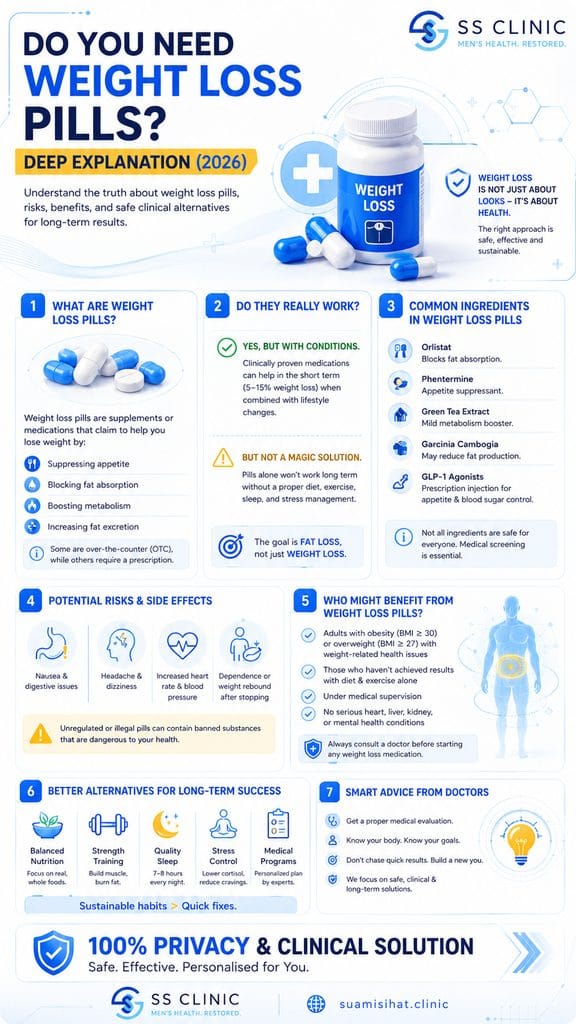
Weight loss pills, medically referred to as anti-obesity medications (AOMs) or pharmacotherapeutic agents, are prescription drugs clinically indicated to assist in weight reduction by suppressing appetite, increasing satiety, or reducing dietary fat absorption in the gastrointestinal tract.
Clinically, these agents are used alongside lifestyle changes for patients with a BMI ≥30, or ≥27 with weight-related conditions such as metabolic syndrome, type 2 diabetes, or hypogonadism.

Causes of Weight Gain
The primary and secondary factors driving excessive weight gain and the subsequent consideration of weight loss pills among Malaysian men include:
- Caloric Surplus & Sedentary Lifestyle: High intake of carbohydrate-dense, hypercaloric local diets combined with prolonged sitting and low physical activity.
- Endocrine & Metabolic Dysregulation: Insulin resistance, chronic low-grade systemic inflammation, and age-related decline in free testosterone levels.
- Chronic Psychological Stress & Sleep Deprivation: Elevated cortisol production driving visceral fat accumulation and impairing metabolic rate.
- Secondary Pharmacological Weight Gain: Usage of concomitant medications (e.g., certain antipsychotics, beta-blockers, or antihistamines) that promote weight retention.
Symptoms of Weight Gain
Clinical manifestations associated with excess adiposity and metabolic distress in male patients encompass:
- Early Phase: Central adiposity (increased waist circumference >90 cm for Asian men), postprandial fatigue, reduced stamina during physical exertion, and mild dyspnea upon mild exertion.
- Advanced Phase: Acanthosis nigricans (darkening of skin folds indicative of insulin resistance), erectile dysfunction, loss of morning erections, joint pain due to mechanical load, and symptoms of obstructive sleep apnea (OSA).
Read : Why New Fathers Get ED: The Science & Solutions (Malaysian)
Obesity Data in Malaysia
According to data from the National Health and Morbidity Survey (NHMS) by the Ministry of Health Malaysia (KKM), the prevalence of overweight and obesity among adult Malaysian males exceeds 50%, representing a significant public health challenge.
Clinical data indicates that metabolic syndrome and obesity-induced hypogonadism disproportionately affect men aged 30 to 55 years in urban centers across Malaysia, correlating strongly with rising incidences of cardiovascular disease and secondary male infertility.
Why Obesity Happens?
Obesity functions as a chronic, relapsing, progressive disease state characterized by adipose tissue dysfunction. Excessive accumulation of visceral fat leads to mechanical and biochemical alterations:
- Adipokine Imbalance: Hypertrophied adipocytes secrete pro-inflammatory cytokines (TNF-alpha, IL-6) and leptin resistance develops, impairing central appetite regulation in the hypothalamus.
- Aromatase Upregulation: Excess adipose tissue contains high concentrations of the aromatase enzyme, which accelerates the peripheral conversion of testosterone into estradiol. This suppression of the hypothalamic-pituitary-testicular (HPT) axis results in secondary hypogonadism, further diminishing muscle mass and promoting fat storage.
Read : Premature Ejaculation Treatments in Malaysia – Clinics, Counseling, Pills & Spray
Risks of Being Overweight & Obese
Unmonitored or unprescribed usage of weight loss supplements, particularly those containing banned stimulants, sibutramine derivatives, or unregulated diuretics, carries severe clinical hazards:
- Cardiovascular Complications: Tachycardia, systemic hypertension, acute myocardial infarction, and arrhythmias.
- Hepatic and Renal Strain: Drug-induced liver injury (DILI) and electrolyte disturbances from unregulated thermogenic agents.
- Psychological Impact: Anxiety, insomnia, dependence, and mood destabilization.

Diagnosis for Overweight & Obese
Clinical evaluation of patients seeking weight loss intervention at SuamiSihat Clinic involves a rigorous diagnostic protocol:
- Anthropometric Assessment: Measurement of BMI, waist-to-hip ratio, and bioelectrical impedance analysis for body composition.
- Biochemical Screening: Fasting blood glucose, HbA1c, comprehensive lipid profiles, liver and renal function tests, and thyroid-stimulating hormone (TSH).
- Hormonal Panel: Total and free testosterone, sex hormone-binding globulin (SHBG), luteinizing hormone (LH), and prolactin to evaluate endocrine status.
Common Myths About Overweight & Obese
Myth: "Quick weight-loss products on the market are safe because they are approved as general health products."
Clinical Fact: Many over-the-counter weight-loss products sold online contain hidden banned substances detected by the National Pharmaceutical Regulatory Agency (NPRA). Unsupervised usage can strain the cardiovascular system and disrupt male hormonal balance.
Trends in Malaysia
In Malaysia, the trend of using weight-loss medications is increasingly gaining attention among urban professional men facing metabolic syndrome due to hectic work schedules and high-calorie dietary patterns.
However, shifting toward medically supervised clinical treatments, especially those that also evaluate male hormone and fertility aspects has now become the primary choice to ensure long-term safety.
Clinical Procedure
At Suami Sihat Clinic, weight management and metabolic support are coordinated with comprehensive hormone health treatments. Please refer to Suami Sihat Clinic Hormone Replacement Therapy for further details on the clinical assessment and treatment protocols provided.
Expert perspectives on sexual, reproductive, and men's health regarding weight loss pills in the context of Malaysia today. Many men in Malaysia experience weight loss difficulties and metabolic problems due to modern lifestyle pressures, high-carbohydrate dietary patterns, and declining endogenous testosterone levels that affect body composition.
A holistic clinical approach is key to treating the root cause of these issues.
"The reality about weight loss pills from a doctor's perspective is that clinical medications are not magical shortcuts, but therapeutic tools requiring accurate diagnosis, close monitoring, and commitment to a healthy lifestyle to protect long-term metabolic and reproductive health."
- Dr Rakesh Subbiah (Head Doctor, SuamiSihat Clinic)
When to See a Doctor?
You are advised to seek immediate clinical evaluation if you experience persistent difficulty losing weight despite diet and exercise, accompanied by significant fatigue, reduced libido, erectile dysfunction, or unstable blood pressure and blood sugar readings.
Delaying professional treatment increases the risk of permanent cardiovascular complications and long-term metabolic failure.
Read : Erectile Dysfunction Treatment in Malaysia, Clinics And What You Have To Know!

Conclusion
Safe weight management requires an evidence-based clinical approach and meticulous professional monitoring. Weight loss pills are only effective and safe when prescribed according to an individual's specific health profile. Get treatment and advice from qualified experts at SuamiSihat Clinic to ensure hormonal balance, metabolic health, and optimal well-being are preserved.
References :
- Kementerian Kesihatan Malaysia (KKM), Clinical Practice Guidelines: Management of Obesity, 15-06-2023
- European Association of Urology (EAU), Guidelines on Male Sexual and Reproductive Health, 12-03-2025
- American Urological Association (AUA), Evaluation and Management of Testosterone Deficiency, 18-09-2024
- National Pharmaceutical Regulatory Agency (NPRA), Health Supplement and Weight Management Guidelines, 10-01-2025
- Malaysian Journal of Public Health Medicine (MJOSH), Obesity and Metabolic Syndrome Trends in Malaysian Men, 20-04-2024
This article has been reviewed and validated by:
Bachelor of Medicine & Bachelor of Surgery and Obstetrics, National University of Ireland. Dr. Rakesh Subbiah is the Head Doctor at the Suami Sihat Clinic network. He is a registered medical practitioner under the Malaysian Medical Council (MMC) with registration (No. 51375).