
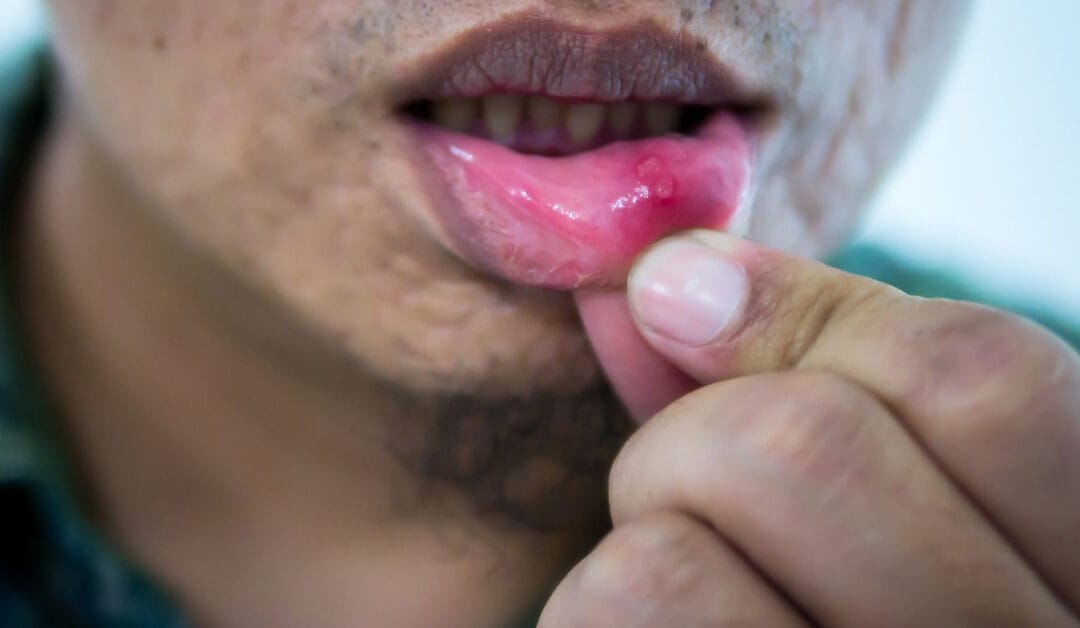
- A viral infection caused by the Herpes Simplex Virus (HSV-1 and HSV-2) manifesting as oral or genital sores.
- High transmission rates occur due to asymptomatic shedding and a lack of public awareness regarding viral latency.
- Persistent social stigma in Malaysia prevents early diagnosis, leading to chronic outbreaks of other Sexually Transmitted Diseases.
- Antiviral suppression therapy, clinical counseling, and specialized lifestyle management.
- Seek a private and professional consultation for an accurate diagnosis and treatment plan.
Understanding Herpes in Malaysian Context
Clinical herpes is an infection caused by the Herpes Simplex Virus (HSV). In Malaysia, we differentiate between two primary types:
HSV-1
Traditionally associated with "cold sores" or oral herpes, but increasingly found in genital infections through oral-to-genital contact.
HSV-2
Primarily associated with genital herpes, transmitted through skin-to-skin contact during sexual activity.
Understanding herpes in the Malaysian context requires acknowledging that the virus is neurotropic; it resides in the nerve ganglia (latent state) and can reactivate during times of low immunity or high stress, a common scenario for busy Malaysian urbanites.
Herpes Data from Malaysia
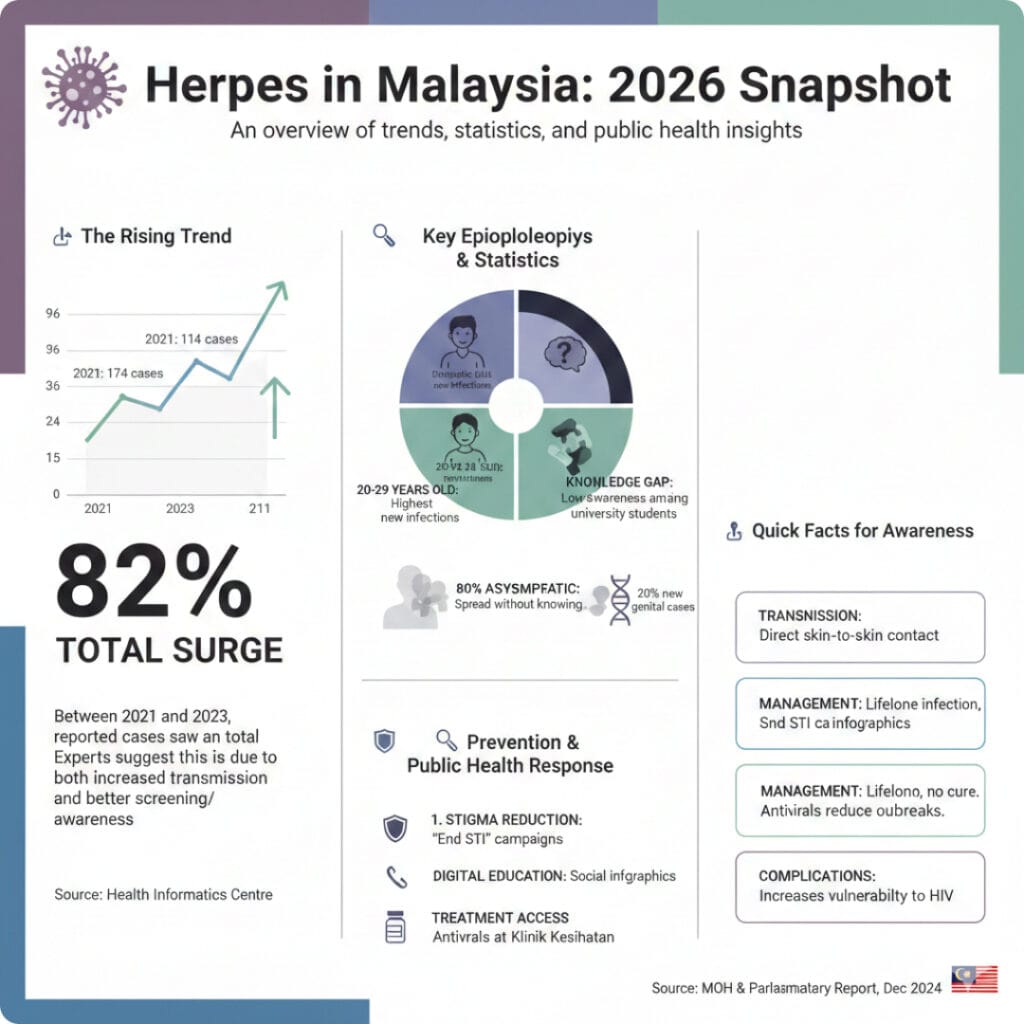
While often underreported due to stigma, data reveals the prevalence of the virus:
- Rising Trends: According to CodeBlue, cases of viral STIs, including herpes, have seen a steady climb in urban centers like Kuala Lumpur and Johor Bahru.
- Demographics: Data from Ministry of Health (KKM) suggests that adults between 20–35 are the most affected demographic.
- Under-diagnosis: A significant portion of the population carries HSV-1, often contracted during childhood through non-sexual contact (e.g., sharing utensils or kisses from family).
How Herpes Spreads in Malaysia
The virus enters through mucosal surfaces or small cracks in the skin. Once inside, it travels along the sensory nerves to the sacral ganglia (for genital herpes) or trigeminal ganglia (for oral herpes).
Here, it stays dormant. When "triggered," the virus travels back down the nerve to the skin surface, causing painful blisters or "tingling" sensations known as the prodromal phase.
Read ; Why Herpes Cases in Malaysia Is Rising?

Risk Factors
In our local experience, several factors increase the likelihood of transmission and reactivation:
- Unprotected Intercourse: Lack of consistent condom use, although herpes can still spread through skin contact not covered by a condom.
- Immune Suppression: Poor diet, lack of sleep, and high cortisol levels—common issues addressed in our Wellness programs.
- Asymptomatic Shedding: The virus can be active on the skin surface even when no visible sores are present.
- Concurrent STDs: Having an existing infection like Syphilis or Chlamydia increases susceptibility.
Herpes Diagnosis
Accurate diagnosis is critical to differentiate herpes from other skin conditions like heat rashes or fungal infections (kurap):
- PCR Swab Test: The "gold standard," where a sample is taken directly from an active lesion.
- Type-Specific IgG Blood Test: Used to check for antibodies if no active sores are present, helping to determine if it is a past or recent infection.
- Clinical Examination: A physical review by a doctor to assess the characteristic "dew drop on a rose petal" appearance of the blisters.
Myths vs Reality About Herpes
| Myths | Reality |
| Herpes can be cured by traditional herbs. | Fact: There is no permanent cure for the virus itself, but modern antivirals can suppress it to the point where it is undetectable and non-transmissible. |
| You can only catch it if the partner has visible sores. | Fact: Asymptomatic shedding means the virus can spread even when the skin looks perfectly healthy. |
| Herpes means you are "dirty" or unfaithful. | Fact: Herpes is a very common skin-to-skin virus. It can remain dormant for years; an outbreak today doesn't necessarily mean a recent exposure. |
"The biggest hurdle in understanding herpes in the Malaysian context isn't the virus itself—it's the stigma. Many patients come to me feeling 'broken,' but herpes is a manageable skin condition. With the right antiviral protocol, my patients lead completely normal lives, have healthy relationships, and protect their partners. The key is early clinical intervention." — Dr. Rakesh Subbiah,Head of Doctors at Suami Sihat Clinic.
When to See a Doctor?
Don't wait for the symptoms to worsen. Visit us if you notice:
- Clusters of small, painful blisters in the genital or anal area.
- Flu-like symptoms (fever, aches) accompanying a new skin rash.
- Painful urination or unusual discharge.
- A "tingling" or "burning" sensation on the skin that recurs in the same spot.

1. Can I get married and have a family if I have herpes?
Yes. Having herpes does not prevent you from having a healthy marriage. With proper suppressive medication and medical guidance, the risk of passing the virus to a partner or child is minimal.
2. Is herpes the same as “kurap” or a common heat rash?
No. While they may look similar to the untrained eye, herpes is viral and recurrent, whereas kurap is fungal. Using the wrong cream (like steroids on herpes) can actually make the outbreak much worse.
3. Will herpes affect my men fertility or sperm quality?
Herpes does not directly cause infertility or lower your sperm count. However, the stress of an outbreak can temporarily affect your libido and sexual performance.
4. How much does a herpes test cost in a private Malaysian clinic?
Costs vary depending on whether you require a swab or a blood test. At SuamiSihat, we provide transparent pricing and focus on discreet, non-judgmental care.
5. Can I catch herpes from sharing a towel or a toilet seat?
The virus is fragile and dies quickly outside the body. While theoretically possible, it is extremely rare. Almost all cases are transmitted through direct skin-to-skin contact.
Conclusion
Understanding herpes in the Malaysian context is about moving past shame and into proactive health management. While the virus may stay with you, it does not define your life or your future.
Clinical treatments today are highly effective at keeping you symptom-free. If you suspect you have been exposed, the bravest thing you can do is get tested and start a professional treatment plan.
References :
- CodeBlue. Rising STI Cases in Urban Malaysia: The Need for Education. 14-Jan-2025. Available at: https://codeblue.galencentre.org/
- KKM (Ministry of Health Malaysia). Garis Panduan Pengurusan Penyakit Jangkitan Kelamin (STI). 10-May-2024. Available at: https://www.moh.gov.my/
- HMetro. Dua daripada tiga lelaki berisiko alami masalah kesihatan seksual. 20-Sep-2025. Available at: https://www.hmetro.com.my/taxonomy/term/2057/2025/09/1269227/dua-daripada-tiga-lelaki-berisiko-alami-masalah-kesihatan-seksual
- PubMed. Herpes Simplex Virus Type 2: Global and Regional Prevalence Estimates. 12-Mar-2024. Available at: https://pubmed.ncbi.nlm.nih.gov/
- International Federation of Gynecology and Obstetrics (FIGO). Viral STI Management in Southeast Asia. 18-Nov-2024. Available at: https://www.figo.org/
Article had been reviewed and confirmed by :
Dr. Rakesh A/L Subbiah
Bachelor of Medicine & Bachelor of Surgery and Obstetrics, National University of Ireland.
Dr. Rakesh Subbiah is the Head of Doctors under Suami Sihat Clinic.
Dr. Rakesh A/L Subbiah is a certified doctor under Malaysia Medical Council (MMC) with registration number (No. 51375)